Beyond the Page: Why Structured Content is Your Business’s Secret Weapon
Share this article.
Stop the clutter. Use data to sell more.
Stop Making Your Website a “Junk Drawer”: The Power of Structured Content
Most business owners treat their websites like that one drawer in the kitchen. You know the one. It’s got a loose battery, a coupon for oil changes from 2012, three dead pens, and a mystery key. To a human, it’s a mess; to a computer, it’s invisible.
If your customers can’t find what they need in under five seconds, they aren’t going to “stick around for the journey.” They’re going to leave. And in the business world, confusion is a leak in your gas tank.
The Problem: The “Blob” of Text
Most websites are built using “blobs.” You open a page, paste a giant wall of text, and hit save.
You are making your customer the hero of a story where the map is written in invisible ink. If you’re Over the Top Cake Supplies, and a customer wants a “beginner-friendly chocolate cake recipe,” they shouldn’t have to read your life story to find the bake time.
Design & Systems Perspective: This is a failure of Chunking. Human memory is limited. When information is unstructured, the “Cognitive Load” is too high. If your data isn’t categorized, it can’t be searched, filtered, or repurposed. You’re paying for content that has a shelf life of zero.
The Solution: Building with Legos (Structured Content)
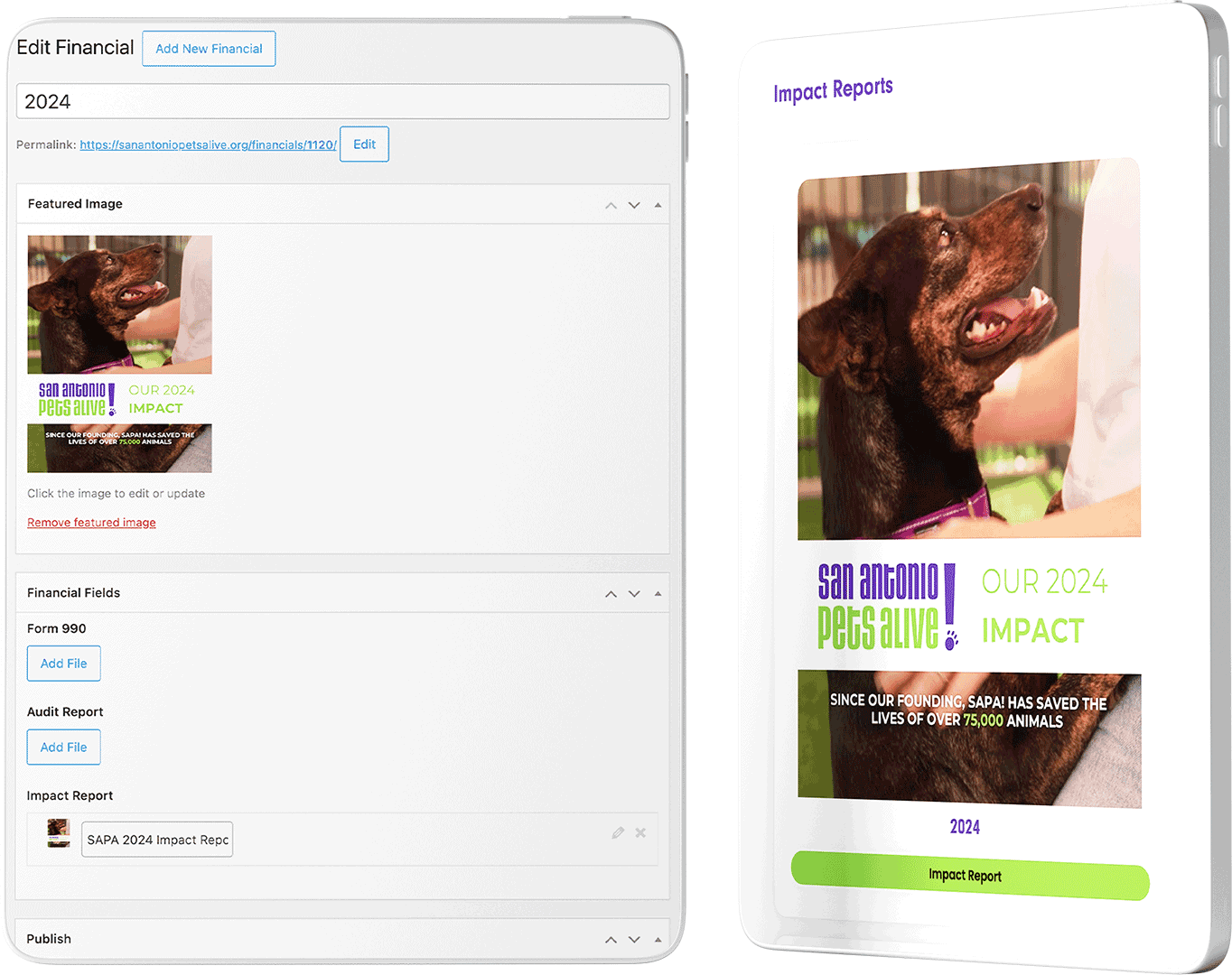
Structured content is simply breaking your information into labeled “bricks.” Instead of one big page, you have a “Cook Time” brick, an “Ingredients” brick, and a “Difficulty” brick.
Case Study: The Cookie Spec Sheet
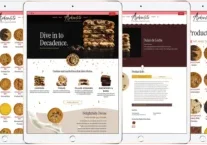
Look at Aphrodite Divine Confections. We didn’t just write a nice paragraph about cookies. We built a system.
- The Ingredient Field: Makes it instantly searchable for people with allergies.
- The Spec Sheet: About 25% of their products have multiple sizes. By structuring this, the website automatically shows the right dimensions and weight for a “Jumbo” vs. a “Standard” cookie.
- The Marketing Assets: Wholesale partners don’t want to hunt; they want a “Download” button for the logo. Structured content puts that button exactly where it belongs.
The Takeaway
Look, nobody is reading your 800-word essay on why you love flour. They want to know if the cookie is going to arrive stale (Shelf Life) and if they can use your photo on their Instagram (Marketing Assets). Give ’em the facts so they can buy the cookies and go back to watching Netflix. It’s not a mystery novel; it’s a transaction.
The Executive Summary (Why this saves money)
If you’re the person signing the checks, here is why you should care about Flexibility and Reusability:
| Executive Concern | The Structured Content Fix |
| Scalability | You write the “Baking Instructions” once. It updates on the website, the printed flyer, and the mobile app simultaneously. |
| SEO Performance | Google rewards “Rich Results.” Structured data (Schema) is how you get those fancy stars and prices in search results. |
| Error Reduction | No more “oops, we updated the shelf life on the product page but forgot the PDF.” There is only one source of truth. |
It’s Not Just for Food
If you’re an HVAC company, your “bricks” are Model Number, BTU Rating, and Warranty Length. If you’re a Law Firm, it’s Case Type, Lead Attorney, and Success Rate. When you structure your content, you stop being a “writer” and start being a Librarian with a Strategy. You make it easy for the customer to win, which—surprise, surprise—is how you win.
Your Next Step
Go to your most important product or service page. Can a customer find the price, the “how-to,” and the “why” in 10 seconds without scrolling?